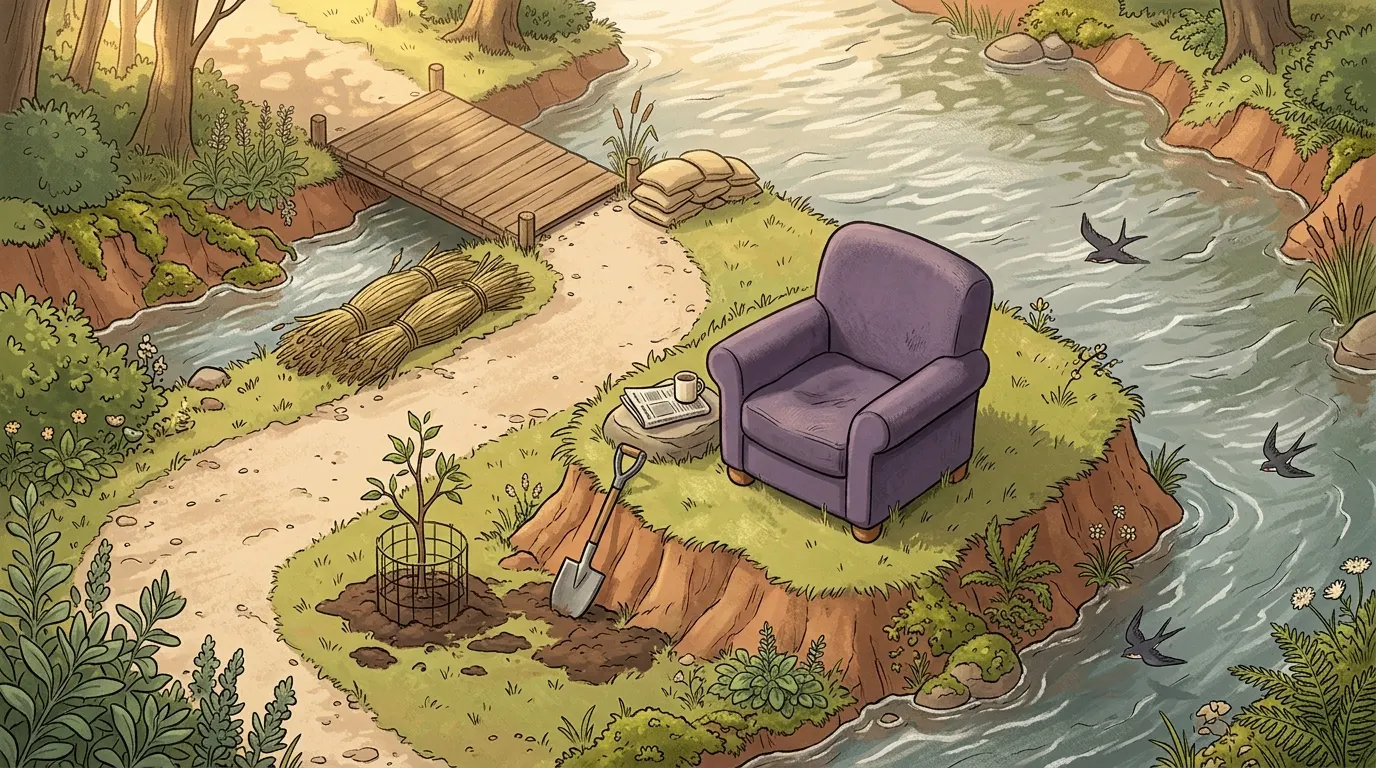
Wars, elections, disasters and outbreaks arrive on your phone all day. You can be safe at home and still feel shaken by them. Feeling overwhelmed when world events are hard is normal.
If you are under 18, YoungMinds has advice on worries about the news and the world.
Source: Mind: upsetting news
Why it reaches you at home
Overwhelm is a physical process, not only an emotional one. Being exposed to a threat sets off the stress response, and chronic stress builds up slowly. It happens even when you are not directly affected.
Stepping back from the news is common. In 2026, half of UK online news users told the Reuters Institute they sometimes or often avoid the news.
That survey counted avoidance, not distress. It does not say why people turn away.
Reactions differ from person to person. There is no right or wrong way to feel.
Sources: Mental Health Foundation: global events, Mental Health Foundation: bad news, Reuters Institute: Digital News Report, Mind: upsetting news
War and conflict
You do not have to be near a war for it to reach you. Steady exposure to global conflict and human rights abuses can leave you feeling helpless and drained.
It can land harder if you have lived through something similar. The same is true if you share a background with those affected.
Guilt is common too: guilt at being safe, guilt at carrying on as normal, guilt at not doing more.
If you have family or friends in a conflict zone, read when it is closer to home.
Source: Mental Health Foundation: bad news
Political upheaval
An election, a court ruling or a new law can change how safe you feel in your own country. It can also change how you feel about people you know.
Arguments are part of the strain. A row with a colleague or a relative can outlast the story that started it.
So is helplessness. It can help to focus on what you can control, and to act for change where you can.
Source: Mind: upsetting news

Disasters and pandemics
Floods, earthquakes, fires and outbreaks bring a particular kind of unease. They arrive without warning, the pictures are hard to unsee, and nobody can tell you when it ends.
If you lived through the last one, the next one can bring it all back. An event abroad can stir memories of your own.
Waiting for news about someone is its own strain. Put no timescale on how long it takes to feel different afterwards.
If the worry is the climate itself rather than one disaster, read our page on climate anxiety.
Too much news
You cannot keep up with everything, and taking a break is allowed. Setting limits is not turning your back on people.
A few small boundaries can help:
If the harder part is not knowing what to believe, our page on misinformation and news overwhelm covers that side.
Sources: Mind: upsetting news, Mental Health Foundation: global events
When it is closer to home
You may not be watching this from a distance. You may have family in a conflict zone, or you may have been near an attack or a disaster yourself.
That is direct exposure, and it needs different help. Very frightening or distressing events can cause post-traumatic stress disorder (PTSD), and symptoms can start months or years later. Our page on trauma explains what that looks like and what helps.
See a GP if you think you have symptoms of PTSD. Do the same if treatment you already have is not working. If you need help right now, our UK crisis page lists lines that answer today.
An attack can affect people who were never directly caught up in it. Two services work with this directly.

Wellbeing guidance for people with family or friends caught up in a crisis abroad, and a service that traces missing relatives.

 England
  Wales
Wales Free confidential support after an attack, whether or not you were directly caught up in it and whether or not you reported anything.
Support is for people in England and Wales only.
Sources: NHS: PTSD overview, Victim Support: terrorism
What talking can help with
A professional will not tell you what to think about any of it. They can help with what it has done to your sleep, your focus and the people around you.
- Worry that carries on long after you put the phone down
- Fear for someone you cannot reach or protect
- Guilt at being safe, or at not doing more
- Anger that spills onto people who do not deserve it
- Grief for a place you cannot go back to
Difficult feelings do not always mean you have a mental health problem. Reach out if they are very upsetting, last a long time or stop you enjoying your life.
If this has settled into anxiety or broken your sleep, those pages say more.
Source: Mind: upsetting news
Thanks for your interest. We're not taking on new clients at the moment.
Ready to stop carrying it alone?
We ask what matters to you, then find professionals who fit.
- I cannot stop thinking about what is happening in the world
- I have family somewhere that is not safe
- The news has started to affect my sleep
- I feel guilty for being safe when others are not
References
- Mind (2026). How to cope with upsetting events in the news. Link
- Mental Health Foundation (2025). When global events and relentless bad news become too much. Link
- Mental Health Foundation (2025). Prevent exposure to relentless bad news harming our mental health. Link
- Reuters Institute for the Study of Journalism (2026). United Kingdom, Digital News Report 2026. Link
- Victim Support (2026). Terrorism. Link
- National Health Service (2026). Post-traumatic stress disorder (PTSD): overview. Link