You do not feel like yourself. Your mood turns without warning, sleep has gone, and words you have always known slip out of reach. If you are in your late forties or early fifties, menopause may be part of the answer.
Menopause is a natural stage of life, not an illness. The years of change before your periods stop are called perimenopause, and the symptoms often start there. The emotional side is real, and NICE names talking therapy among the options for it.
Sources: NHS: menopause overview, NICE NG23
What we are and what we are not
We help you find a professional who works with the emotional and psychological side of menopause. That support runs alongside your GP and any medical treatment, including HRT. It never replaces them.
If you think you have symptoms of menopause or perimenopause, the NHS advises contacting your GP first. A GP can talk through HRT and other medicines with you. We do not diagnose, and we do not give medical advice.
Sources: NHS: menopause symptoms, NHS: menopause treatment
How it can feel
Hot flushes and night sweats are the symptoms everyone has heard of. The ones that bring people to us are quieter. The NHS lists them too:
- Mood swings, low mood or depression
- Anxiety that arrives without a reason you can name
- Problems with memory or concentration, often called brain fog
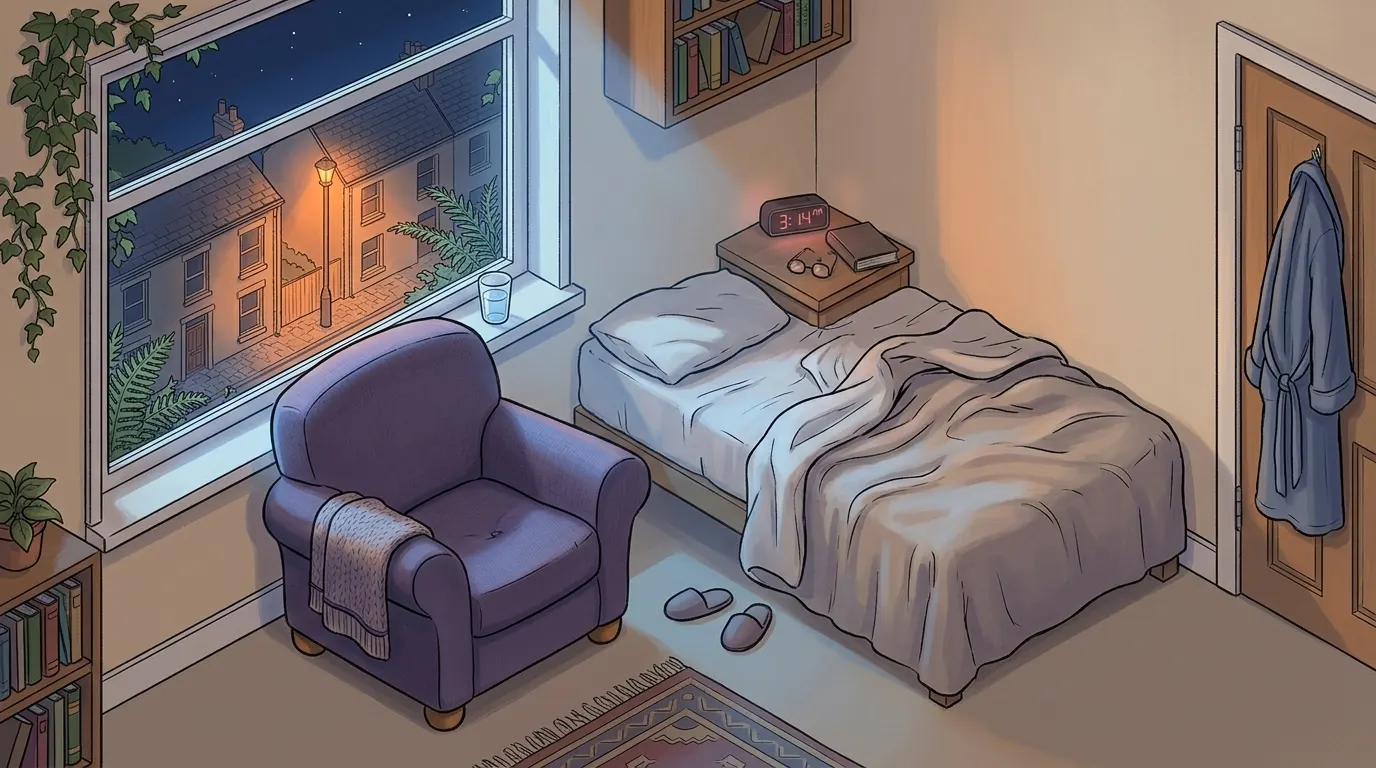
- Sleep that will not come, or will not last
- Less interest in sex
Poor sleep feeds the rest. When you cannot get to sleep or stay asleep, you feel irritable, stressed and anxious the next day. The fog and the fear then look like proof that something is badly wrong.
Many people describe something harder to list. A sense of being invisible, or of grieving a body and a life that felt like yours. That belongs in the room too.
Source: NHS: menopause symptoms
Low mood or depression
Mood changes in menopause are common, and NHS inform is clear that they should not be confused with depression. Depression is a more serious condition, where very low mood is more constant and lasts longer.
The two can overlap, and hormones do not explain everything. If you already lived with anxiety or low mood, menopause can turn the volume up. Our anxiety page covers that side in more depth.
If low mood has settled in and stayed for weeks, tell your GP. Antidepressants are an option the NHS names for low mood, depression or anxiety caused by menopause.
Sources: NHS inform: menopause wellbeing, NHS: menopause treatment

What talking therapy can do
The NHS names cognitive behavioural therapy as a talking therapy that can help with low mood and anxiety. It can help with sleep problems and hot flushes too.
NICE takes the same view. Its 2024 update says to consider menopause-specific CBT for hot flushes, plus sleep and low mood linked to them. It can run alongside HRT or instead of it.
We summarise the guideline here rather than quote it, so read the source for the detail.
CBT for menopause works on the thoughts that turn a symptom into a spiral. A hot flush in a meeting becomes "everyone can see, I am losing it". The fear makes the next one worse.
Therapy loosens that link. It also teaches paced breathing and sleep habits that hold up on bad nights.
Not everyone wants a structured approach. If what you need is space to talk about who you are becoming, a person-centred counsellor may fit better. Both are talking therapies, and a good first session helps you tell which one you want.
Sources: NHS: menopause self-help, NICE NG23
HRT and therapy
Oestrogen is the main type of HRT, and it can help manage your symptoms. For many people it lifts mood and sleep as well as the flushes. That decision sits with you and your GP.
Therapy is not the alternative to HRT. It is what you do alongside it, or while you wait, or if you cannot take it.
Some people start HRT and still feel low. That is a reason to talk to someone, not a failure of the medicine.
Source: NHS: menopause treatment
Who to look for
Look for a professional who names menopause or midlife in their profile, and ask how they work with it. A CBT therapist trained in menopause symptoms will describe a short course, often with sleep and breathing skills. A counsellor will describe open sessions at your pace.
You can bring the whole picture. Work, relationships, ageing parents and children leaving home often land in the same few years. A good professional will not make you pick one.
We hear from people who waited years because they thought it was just menopause and they should cope. You do not have to cope alone. Tell us what has changed, and we will find the right person.
Thanks for your interest. We're not taking on new clients at the moment.
Ready to find support through menopause?
We ask what matters to you, then find professionals who fit.
- I do not feel like myself any more
- My mood swings and I cannot explain why
- I cannot think straight and I am scared it is something worse
- I am on HRT and I still feel low
References
- National Health Service (2026). Menopause and perimenopause: overview. Link
- National Health Service (2026). Symptoms of menopause and perimenopause. Link
- National Health Service (2026). Things you can do to help menopause and perimenopause symptoms. Link
- National Health Service (2026). Treatment for menopause and perimenopause. Link
- NHS inform (2022). Menopause and your mental wellbeing. Link
- National Institute for Health and Care Excellence (2024). Menopause: identification and management (NG23). Link